

Condos and townhomes are not the same thing. Not even close. And yet buyers compare them every day as if the only difference is the name on the door. This blog exists to fix that — because the gap between what you think you're getting and what you're actually getting is wider than most people realize. And it shows up in ways that matter: what you own, how you finance it, what it costs you over time, and what happens when you try to sell.
Here's the full picture.
What Are You Actually Buying?
This is where most conversations about condos and townhomes go wrong — people assume they're essentially the same product with a different name. They're not.
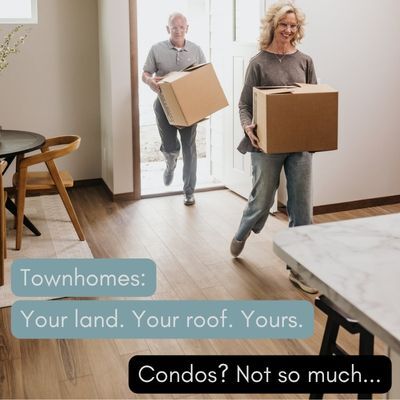
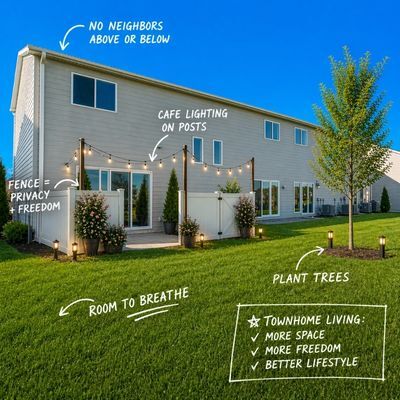
When you buy a townhome you own the home, the exterior, the roof, and the land it sits on. That's real property in the traditional sense — the kind that builds equity, appreciates with the market, and gives you a meaningful degree of control over your own investment.
When you buy a condo you own the interior of your unit. Lenders actually have a term for it — they call it "the space between the walls." Everything outside those walls — the roof above you, the hallway outside your door, the yard you can see from your window, the exterior of the building — belongs to the HOA and is shared with every other owner in the complex. You're not buying a home in the traditional sense. You're buying a share of a building.
That distinction matters more than most people realize — and it ripples through every other part of the decision.
The True Cost Of Cheaper
Condos are often less expensive upfront. That part is true. But cheaper at closing and cheaper overall are two very different things — and the gap between them is where a lot of buyers get surprised.
Start with HOA fees. Condo HOA fees typically run significantly higher than townhome HOA fees because condo associations are responsible for maintaining the entire building — the roof, the exterior, the common areas, and all shared infrastructure. Those costs get passed along to owners every single month. And unlike your mortgage payment, HOA fees aren't fixed. They increase over time as the building ages and maintenance costs rise.
Then there's the price per square foot trap. Condos appear cheaper on paper but are often smaller — which means when you actually run the numbers the price per square foot can be higher than a comparable townhome. The sticker price doesn't always tell the whole story.
And then there are special assessments — arguably the biggest financial wildcard in condo ownership. When a condo HOA's reserve fund runs short and a major repair is needed — a new roof, structural work, or significant common area repairs — every unit owner gets a bill. These assessments can range from a few thousand dollars to tens of thousands per unit depending on the building and the repair. The timeline is usually not optional and neither is the payment. Townhome owners make their own maintenance decisions on their own timeline and their own budget.
The Financing Reality
Here's something that catches a lot of buyers off guard: financing a condo and financing a townhome are not the same process.
Financing a townhome works just like financing a single family home — straightforward, competitive, and open to any lender you choose. The process is clean because you own real property with land attached and lenders understand exactly what they're lending against.
Condos introduce a layer of complexity that surprises most buyers. Lenders don't just evaluate you — they evaluate the entire building. The financial health of the HOA, the percentage of units that are owner-occupied versus investor-owned, any pending litigation against the building — all of it factors into whether your loan gets approved and at what rate. Some lenders won't touch certain condo projects at all. Others charge more to do it. It gets complicated enough that builders sometimes have to step in with a preferred lender just to get deals across the finish line. That's not a knock on any particular project — it's just the reality of how condo financing works.
What Happens When You Want To Sell
Resale is where the long game really plays out — and townhomes have a meaningful advantage.
Townhome values track much more closely with the broader housing market and with single family home prices in the area. When the market moves, townhomes tend to move with it.
Condo resale is more complicated. Values can be influenced by factors entirely outside your control — the quality of HOA management, rising monthly fees, a history of special assessments, the percentage of investor-owned units in the building. A well run condo in a desirable location can hold its value. A poorly managed one in the same zip code can be genuinely difficult to sell. The difference between the two often has nothing to do with your unit specifically — and everything to do with decisions made by people you've never met.
There's also the buyer pool to consider. Condo financing requirements mean some buyers simply can't purchase in certain buildings regardless of how much they want to. A smaller buyer pool means less competition for your unit when it's time to sell — which rarely works in your favor.
The Control Question
This one doesn't get talked about enough. When you own a condo you are part of a collective — and collective ownership means collective decision making.
If the HOA votes to add a new amenity, undertake a major renovation, or change the rules about pets, parking, or rentals — you're subject to that decision whether you voted for it or not. You can participate in HOA meetings. You can vote. But you can be outvoted — and the financial consequences of those votes land in your lap regardless.
Many condo HOAs also have restrictions on renting your unit. If your life changes and you want to lease your place for a year or two — that might not be an option depending on the building's rules. Townhome owners generally have significantly more flexibility.
Why New Construction Townhomes Change The Equation
Everything we've talked about so far applies to the condo vs. townhome comparison broadly. But new construction townhomes in Sioux Falls specifically offer something the resale market almost never can — a home built for how people actually live today.
Modern layouts. Current finishes. Energy efficient systems. No deferred maintenance. No inherited repairs. No wondering what the previous owner did or didn't take care of. At Empire Homes our townhomes are built with real life in mind — the kind of spaces that work for growing families, for downsizers looking for something smart and manageable, and for first time buyers who want to start strong without inheriting someone else's problems.
And because you own the land, the exterior, and the roof — you're building real equity from day one. Not paying into a shared fund that covers repairs on a building you don't control.
The Bottom Line
A townhome isn't just a different type of attached housing. It's a fundamentally different ownership experience — one that comes with the land beneath it, the roof above it, and the freedom to make decisions about your own home without asking anyone's permission.
Most buyers don't have the full picture when they walk into this comparison. The financing complexity. The HOA fee trajectory. The special assessment risk. The resale dynamics. The loss of control over decisions that affect your investment.
Now you do.